
MUSEUM LV
Grata JJ
2559128

50668

Authorization
MUSEUM LV
Grata JJ
2559128
50668
Archive filter
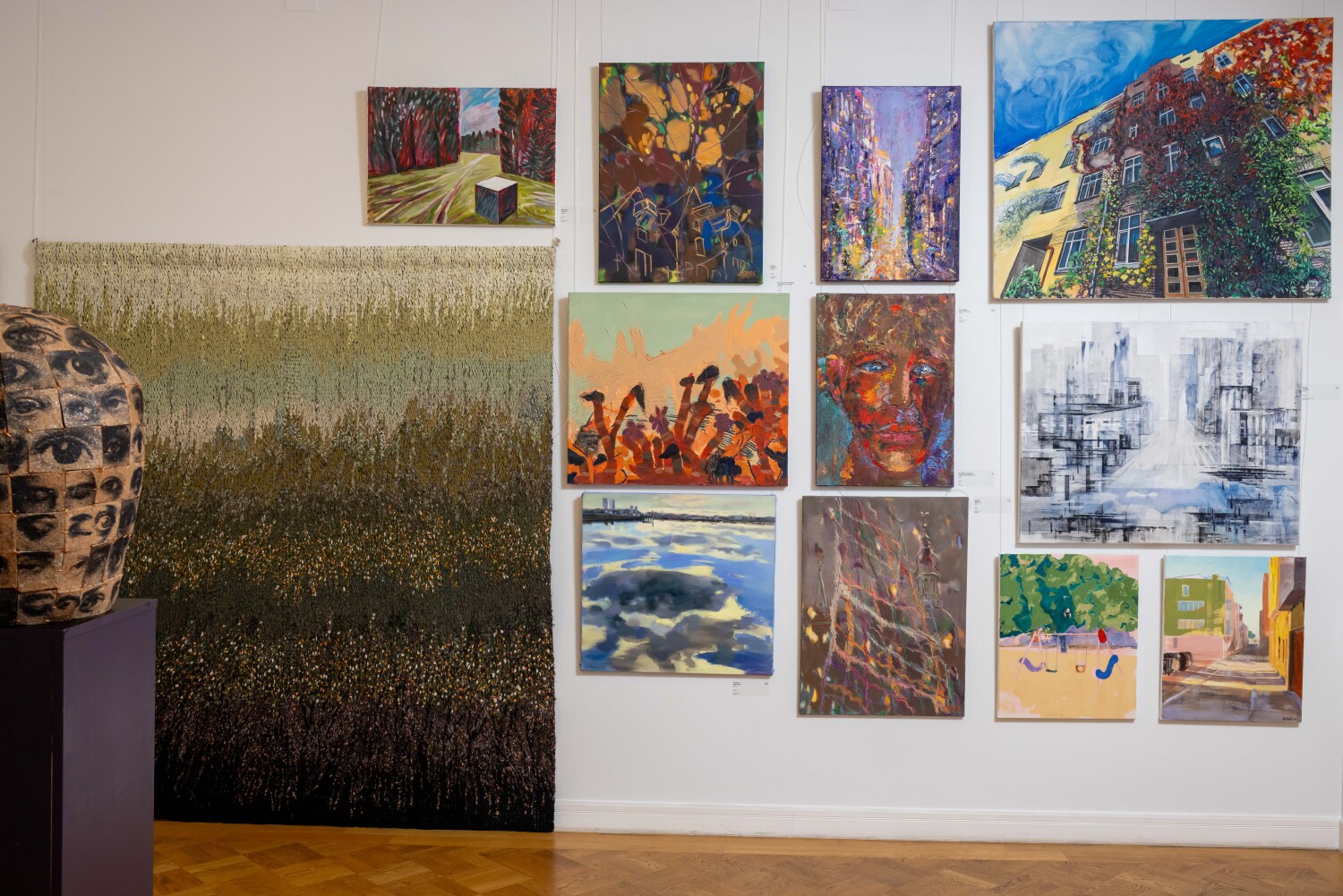 Appreciation to the Participants of the GRATA BALVA 2026 Competition
Dear Participants of the GRATA BALVA 2026 Competition,
The team of MuseumLV Gallery and GrataJJ Cultural Centre sincerely thanks you for your participation in the project “Multilayered Identity: Encountering Otherness in Urban Space.” We greatly appreciate your creative perspectives on this year’s theme, its diverse interpretations, as well as the thoughtful and professional execution of your works.
This year, 86 artists took part in the competition, while 113 works and installations were presented in the exhibition. During the exhibition, thousands of residents and visitors of Latvia had the opportunity to discover and experience your creative works.
Several public and private events were organised as part of the competition and exhibition, giving visitors the opportunity to learn more about the participating artists and their work. This year, the exhibition curator, Doctor of Arts (Dr. art.) Deniss Hanovs, also conducted special guided tours for representatives of embassies and members of the Riga City Council, introducing them to the exhibition’s concept and the works of the artists represented in the competition. The project was also featured in various media outlets and leading Latvian information portals.
Working on the GRATA BALVA 2026 project has been a meaningful and inspiring experience for us. We were delighted to communicate with each artist, discover their creative stories, and hear the impressions of the exhibition’s visitors. We sincerely hope to welcome you again in our future projects at MuseumLV Gallery and GrataJJ Cultural Centre.
We highly value your contribution, creative energy, and commitment to personal growth and to the development of Latvia’s cultural and artistic environment.
We would like to remind you that 11 September is the final day of the exhibition “Multilayered Identity: Encountering Otherness in Urban Space.” We kindly ask you to collect your work during the gallery’s working days between 25 September and 24 October.
We are also pleased to invite you to the opening of the gallery’s next exhibition on 24 September – Denijs Berkovskis “The Adventures of Saint Ilya in the Land of Childhood Dreams.” The invitation will be sent at a later date.
Kind regards,
The team of MuseumLV Gallery and GrataJJ Cultural Centre
Attached materials
 0
Pictures
0
Works
0
Pictures
0
Works
 0
Video
0
Video
 0
Articles
0
Articles
 0
Files
0
Files
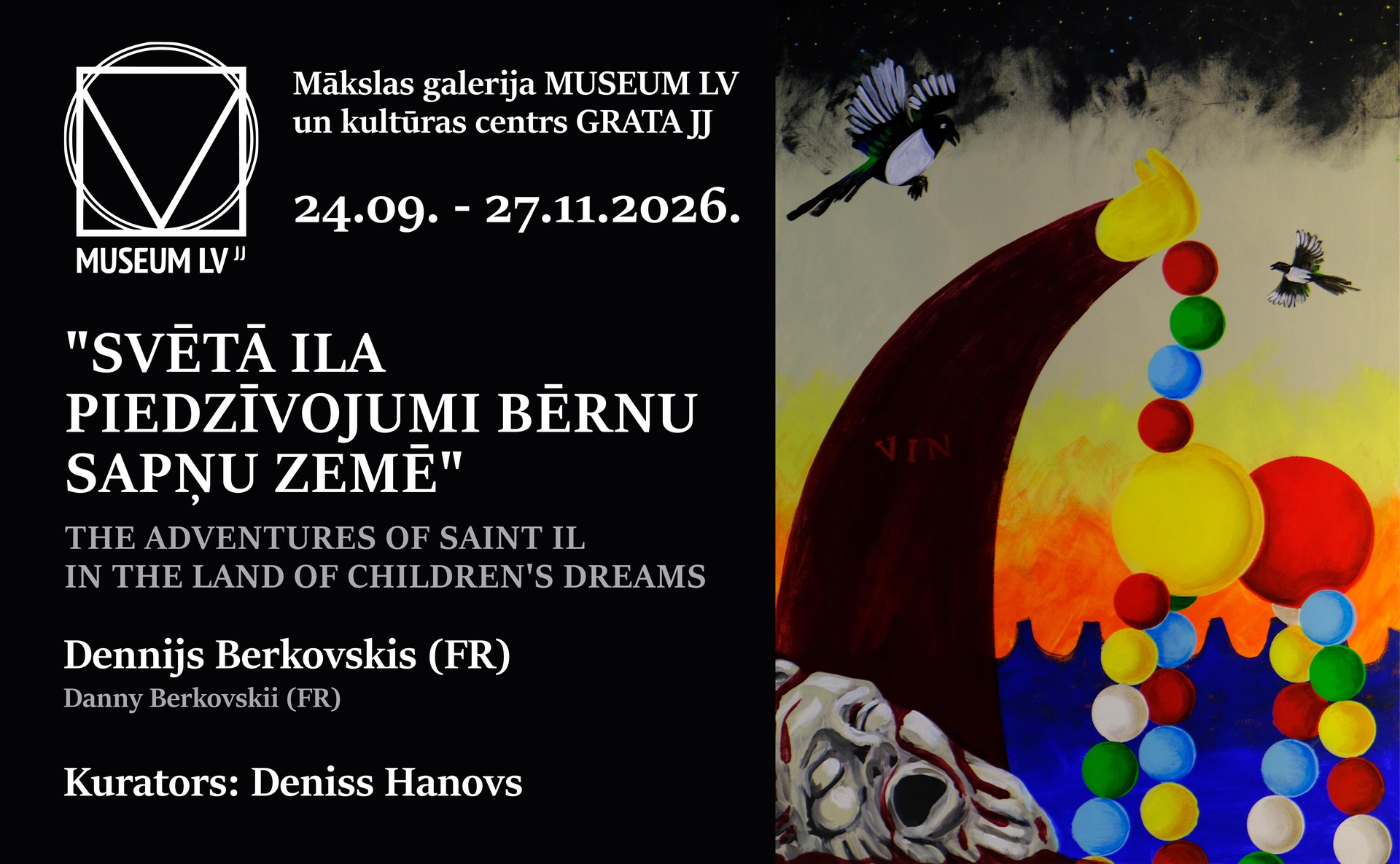 Denija Berkovska’s solo exhibition “The Adventures of Saint Il (Svyatoy Ilj) in the Land of Children's Dreams”
Dear gallery MuseumLV and Grata JJ cultural centre friends and colleagues!
From September 24 to November 27, 2026, the exhibition “The Adventures of Saint Il (Svyatoy Ilj) in the Land of Children's Dreams” by artist Danny Berkovskii will be on view at MuseumLV Art Gallery, located in the Grata JJ Cultural Center.
The exhibition “The Adventures of Saint Il (Svyatoy Ilj) in the Land of Children's Dreams” explores themes of childhood memory, loss, emigration, and the search for a new identity. Its central figure, Ilj (French for he), becomes a guide through the realms of dreams, memory, and inner transformation, connecting the artist’s personal experience with universal questions of growing up, compassion, and overcoming the legacy of the post-imperial past. Danny Berkovskii’s vibrant paintings, distinguished by their bold use of colour and symbolic imagery, invite viewers into an emotional dialogue with their own memories and inner world.
Author’s CV
Danny Berkovskii is an artist, illustrator, and curator born in Bashkortostan, currently living and working in Marseille, France. Through his painting, he explores themes of memory, childhood, new masculinity, religion, and personal identity, combining elements of surrealism, conceptualism, and pop art. Rich in symbolism and references to personal experience, post-Soviet culture, and Mordovian mythology, his works form a cohesive artistic universe under the motto A BOY IS NOT A GUN.
Sincerely,
Gallery MuseumLV and Culture centre JJ
Attached materials
0
Pictures
0
Works
0
Video
0
Articles
2
Files
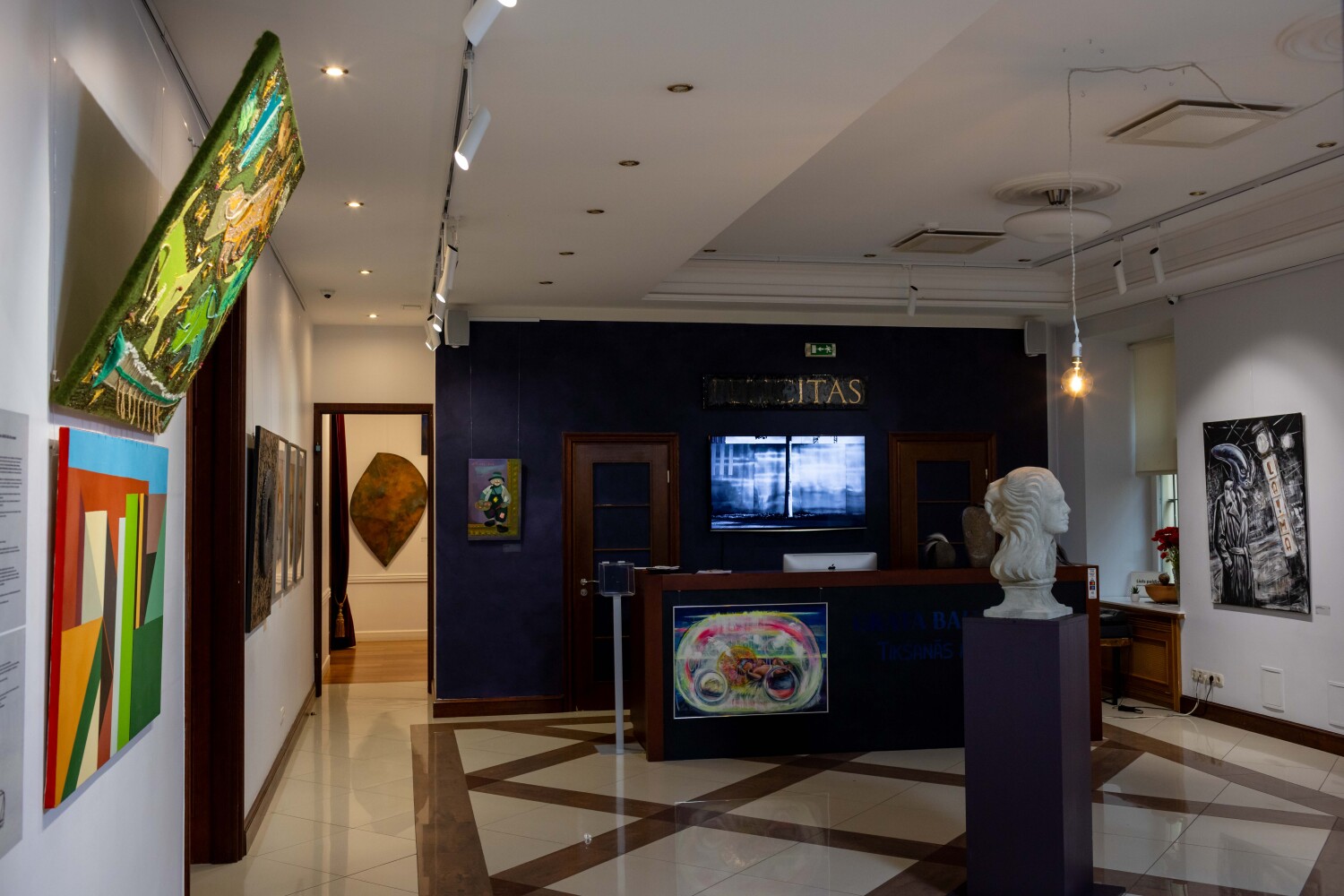 Welcome to the New Season!
After a short summer break, MuseumLV Gallery is once again opening its doors and welcoming the new season.
We have new projects, new exhibitions, exhibition openings, and meetings with our friends, visitors, artists, and contemporary art enthusiasts ahead. We are already actively preparing the events of the upcoming season, and very soon we will tell you more about what we have in store for you.
In the meantime, we are pleased to announce that the Grata Balva 2026 exhibition “Multilayered Identity: Encountering Otherness in Urban Space” has been extended until 12 September, inclusive.
We invite you to take this opportunity to visit the exhibition and discover the artworks presented as part of the show.
May the new season be filled with inspiration, creative discoveries, and meaningful encounters!
See you at MuseumLV Gallery!
Attached materials
0
Pictures
0
Works
0
Video
0
Articles
0
Files
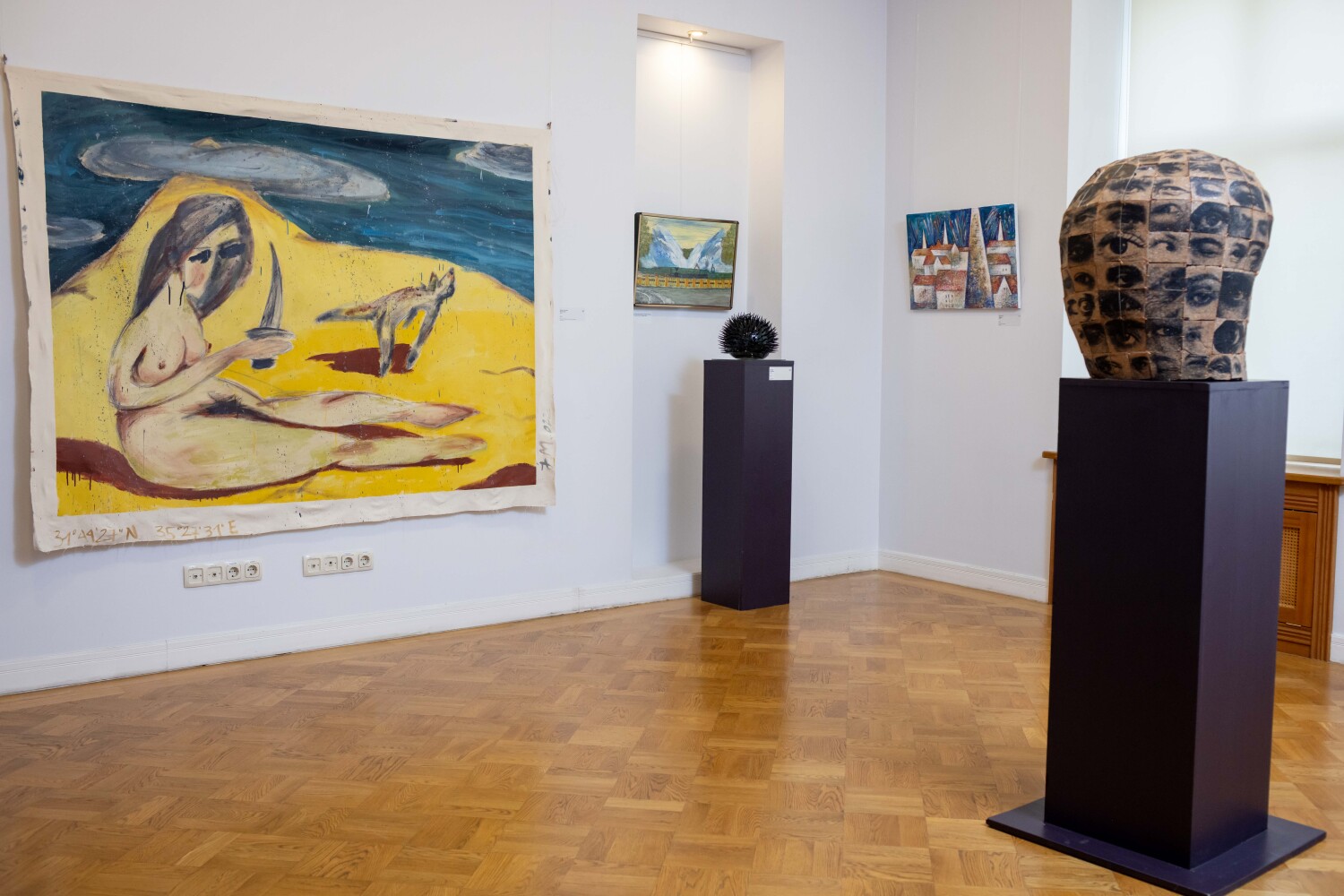 Galerija MuseumLV dodas vasaras atvaļinājumā
Cienījamie galerijas viesi, draugi un sadarbības partneri!
Informējam, ka no 11. līdz 31. augustam galerija MuseumLV būs slēgta vasaras atvaļinājuma dēļ.
Pateicamies ikvienam, kurš šajā sezonā apmeklēja mūsu izstādes, piedalījās pasākumos un bija kopā ar mums.
Jau septembrī atgriezīsimies ar jaunu enerģiju un priecāsimies Jūs atkal sagaidīt galerijā – jaunajā izstāžu sezonā, kurā gaidāmi jauni projekti, tikšanās un iedvesmojoši notikumi.
Uz tikšanos septembrī!
MuseumLV galerija
Attached materials
0
Pictures
0
Works
0
Video
0
Articles
0
Files
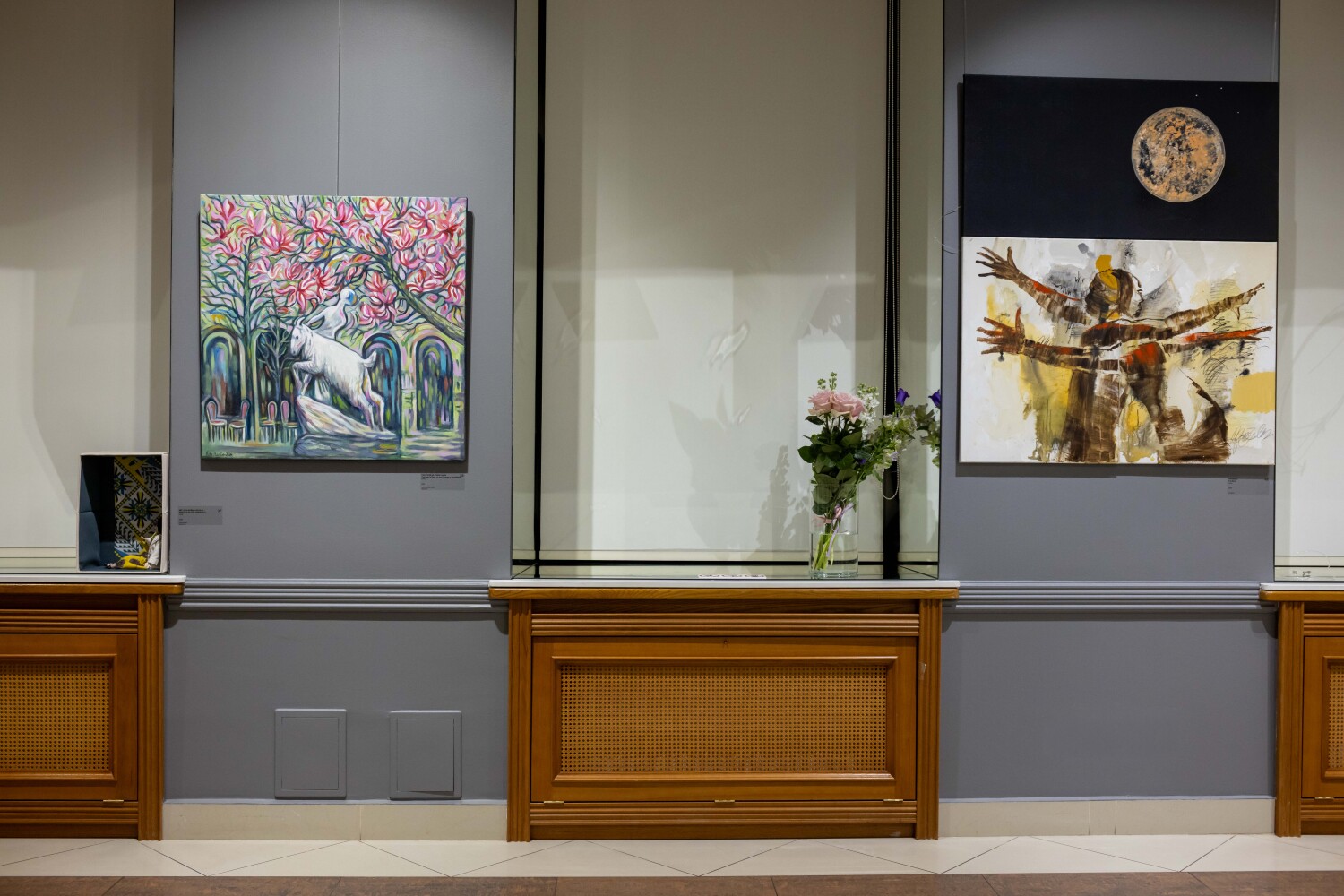 Exhibition "Encountering the Other" – Extended Opening Period
Dear friends of MuseumLV Gallery,
We would like to remind you that the exhibition "Encountering the Other" will remain open until August 8 (inclusive) and will reopen for a short period from September 1 to September 11.
We warmly invite you to take this opportunity to explore the artistic worlds of our fellow artists and discover their reflections on the Other in the urban environment.
Thank you for your interest and support. We look forward to welcoming you to the exhibition!
Kind regards,
MuseumLV Gallery
Attached materials
0
Pictures
0
Works
0
Video
0
Articles
0
Files
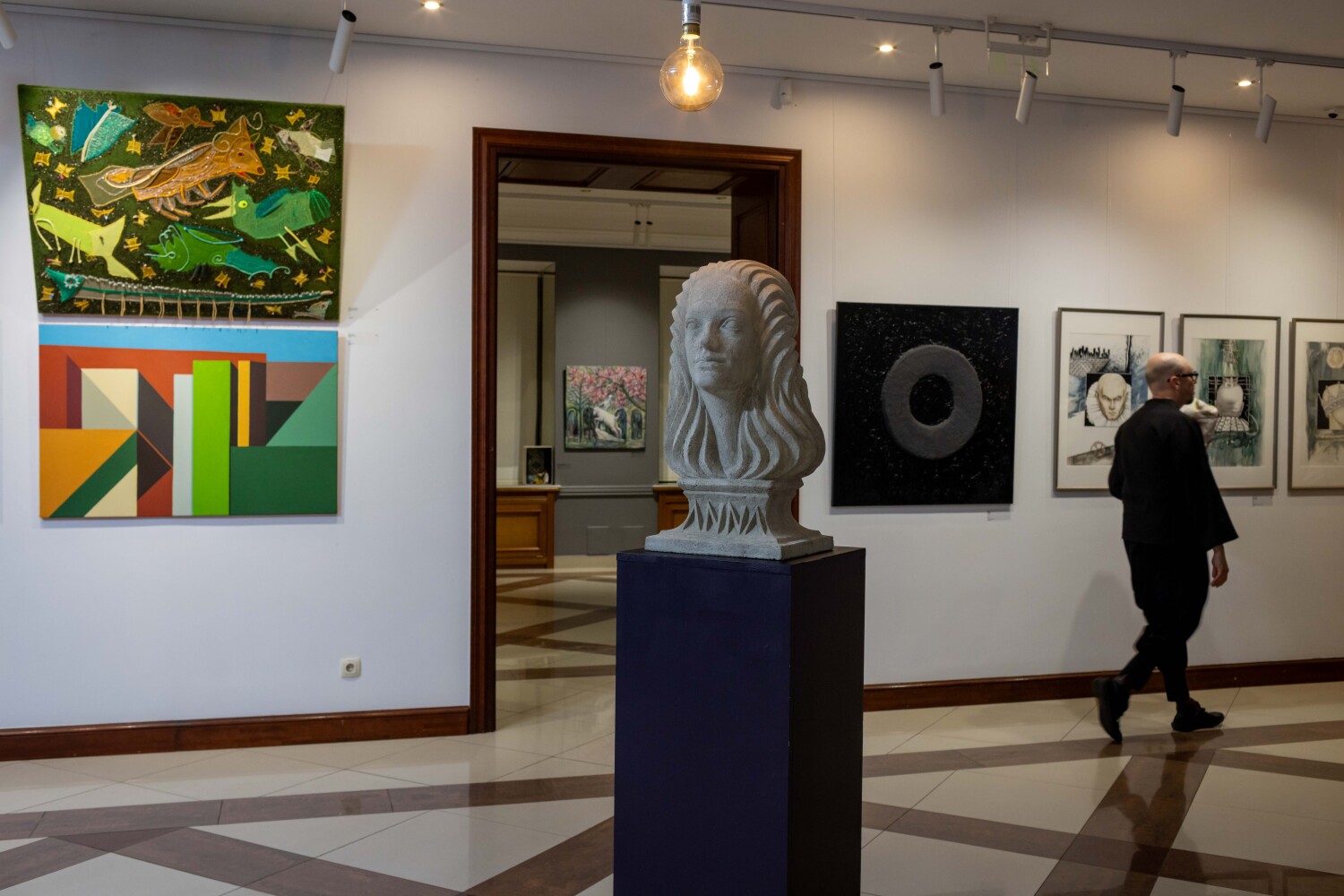 Last Chance to Explore the Exhibition with the Curator!
Dear Colleagues and Friends of the MuseumLV Art Gallery at Grata JJ Cultural Centre,
We warmly invite you to a special closing guided tour with the exhibition curator, Dr. art. Deniss Hanovs. This will be the final opportunity to revisit the international exhibition and competition “Multilayered Identity: Encountering the Other in Urban Space” and experience the exhibition through the curator’s perspective, even after its official closing.
During the tour, the curator will introduce the exhibition’s concept and discuss works by artists from Latvia and abroad, exploring the connections between them, their symbolic meanings, and their broader cultural context. This is a rare opportunity to discover the exhibition from a new perspective, delving into the themes of identity, belonging, imagination, and the urban experience that unite the exhibition.
Event Information
Date: 5 August 2026
Time: 6:00 PM
Venue: MuseumLV Gallery, 2 A. Pumpura Street, Riga
Guided by: Dr. art. Deniss Hanovs
Language: Latvian
Admission: €5
Registration: No advance registration required
Capacity: Up to 25 participants
Don't miss this unique opportunity to conclude the exhibition’s story together with its curator and discover new meanings hidden within the artworks.
Everyone is warmly welcome!
Attached materials
0
Pictures
0
Works
0
Video
0
Articles
0
Files
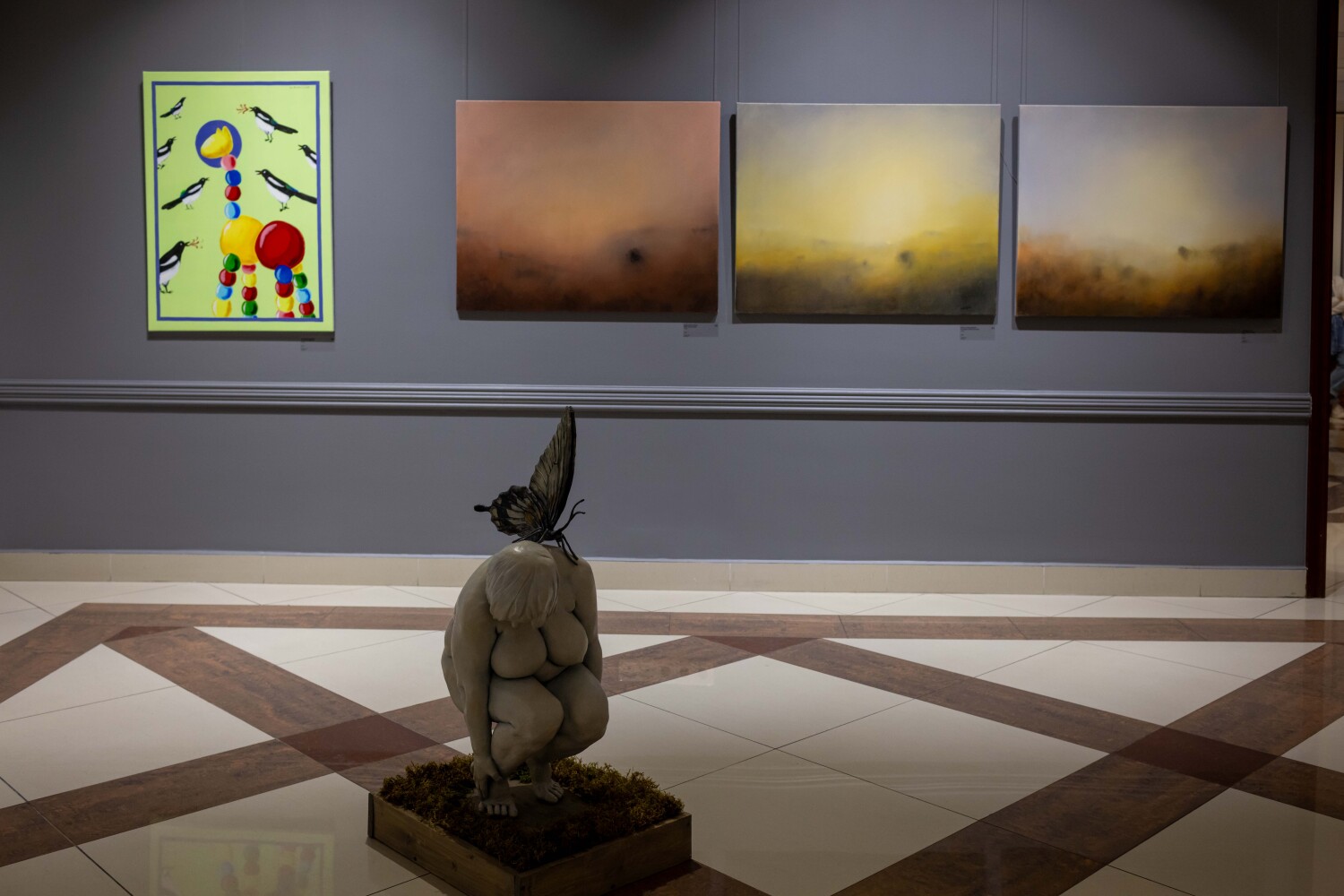 Riga Last Thursday at MuseumLV Gallery!
Attached materials
0
Pictures
0
Works
0
Video
0
Articles
0
Files
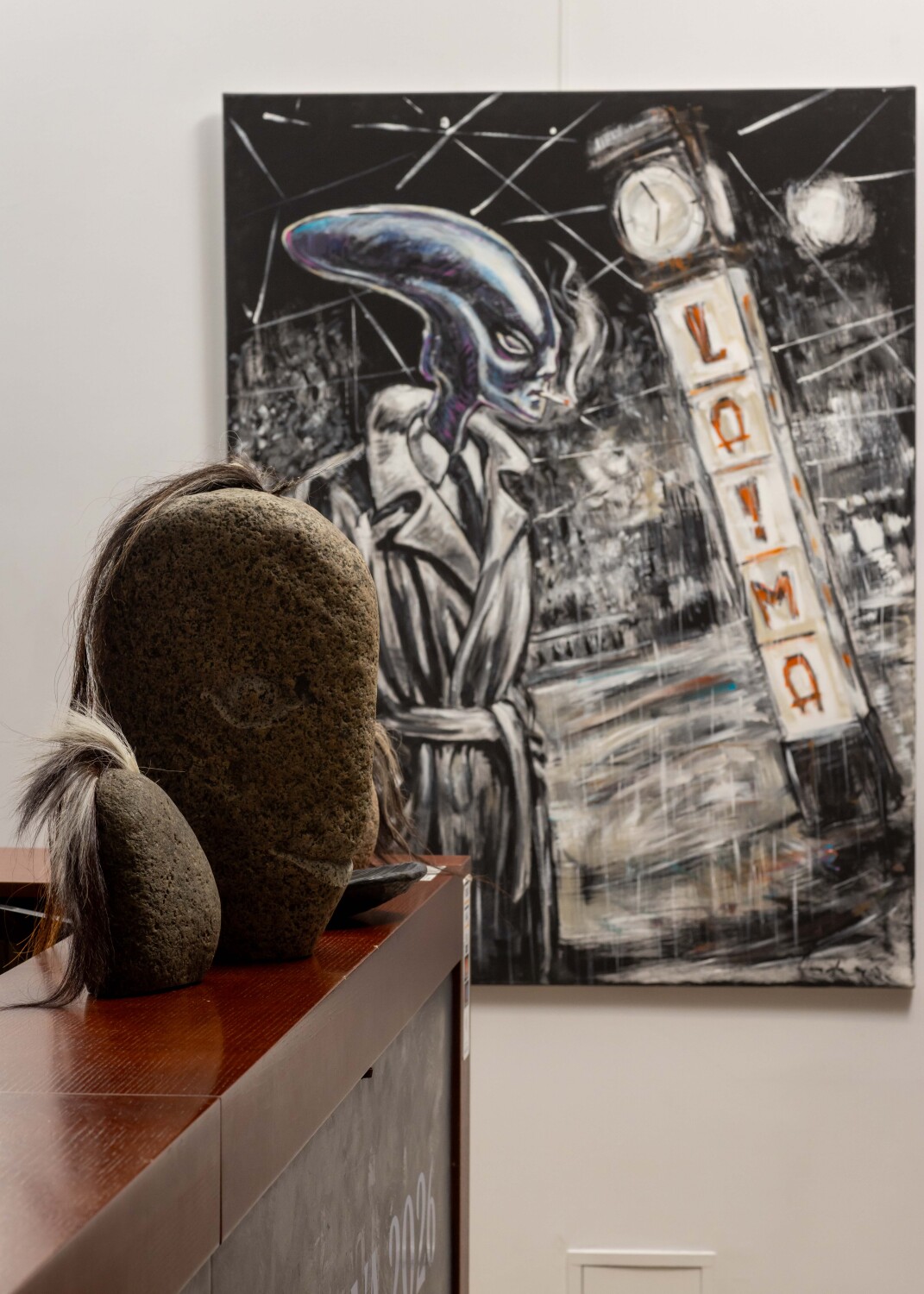 GRATA BALVA 2026: “Multilayered Identity: Encountering the Other in Urban Space” by Art Historian Lolita Tomsone
The Residue of the Landscape, or Things That Continue to Live Without Us
Writer Andra Neiburga once wrote in her diaries: “I am what remains.” Standing before Ieva Kalēja's painting Water Tower. Autumn on Ganību Dambis, which received the GRATA Curator's Award, those words come to mind even before learning this year's theme of the extensive exhibition.
In this autumnal landscape, enveloped by dark water and shrubs, the water tower is not merely an old industrial object, a nostalgic silhouette on the outskirts of Riga, or an elegantly weathered piece of engineering. It is the city's technical memory—a former mechanism for lifting water that once connected the underground, labour, factories, workers and their thirst, the entire invisible infrastructure of everyday life that people rarely think about until it ceases to function. The tower, once indispensable, now stands in the landscape as an object whose purpose has ended, yet whose presence has not disappeared.
The GRATA AWARD 2026 International Visual Arts Competition exhibition, Multilayered Identity: Encountering the Other in Urban Space, opens with a bold and demanding proposition. Curator Deniss Hanovs poses questions about the Other, the Familiar, and urban space that are broad enough to encompass almost anything—from loneliness in the city to decorative fantasies about difference. Yet the exhibition's strongest works preserve the tension of these questions because, within them, the Other is neither an illustration, nor an exotic motif, nor an artistic accessory. It is a genuine presence that unsettles the viewer's secure position and momentarily compels them to rearrange their gaze.
For philosopher Emmanuel Levinas, the Other is not merely decorative otherness that can be calmly observed, described, and placed on a thematic shelf. The Other begins precisely where my gaze can no longer fully appropriate what it sees. In this sense, the exhibition's most compelling works are not those that illustrate difference, but those in which something resists easy understanding.
Levinas writes that "knowledge is always an encounter with an independent reality that resists the knowing subject." It is precisely this resistance that proves far more significant throughout the exhibition than any effortless discourse about otherness. The strongest works refuse to let the viewer relax or reduce them to another example of the announced theme. The water tower is no longer merely an element of an industrial landscape; the soft woven cross is no longer simply a Christian symbol; the monument is no longer only a political object but the captured moment of its collapse; and the small figure in the painting Wave is no longer merely lonely—it awakens an almost physical desire to carry it out of the darkness.
These 106 works do not offer a single answer to the question of the Other. Rather, they present one hundred and six variations on loneliness, intimacy, and missed encounters. Someone walks past; someone longs to lie embraced by a forgiving cross; elsewhere a woman lies in the desert holding a knife; someone else has been left in the grass like a red plastic bag; in an abandoned house, trees begin to live where people once did. Like our own world, the exhibition is uneven, and perhaps it could never be otherwise when so many different artistic techniques meet within a single competition.
What Remains of the City
Ganību Dambis, in Ieva Kalēja's Water Tower. Autumn on Ganību Dambis, is far more than a place name or a point on Riga's map. It is not the city's elegant façade but a liminal zone—a threshold where even the street's name preserves memories of pastures and cattle that were eventually replaced by warehouses, factories, and water that had to be controlled, confined, and forced into human service.
In the painting, the tower stands among trees and autumn darkness while water glimmers in the foreground, as though reminding us that it has long since reclaimed its freedom from the system that once imprisoned it high above the city.
The exhibition's most powerful statement on Riga's political landscape is Līga Kalniņa's Victory Park – 25 August 2022. A Bigger Splash, which captures the moment when the Victory Monument crashes into the water, its impact sending towering white sprays skyward like enormous wings. There is something of the fallen angel in this image, born in the midst of the wave of Soviet monument removals. The painting fuses long-accumulated impossibilities into a single scene: for one community, the monument embodied a ritual of remembrance; for another, it represented humiliation, the enduring presence of occupation, and the foreign bones of fallen soldiers embedded in the city's body.
The police barriers visible in the foreground remind us that this historic event could only be witnessed from a distance. At the same time, the tiny excavators working beside the monumental splash render the event both grand and absurdly practical. Even the end of a symbol requires cables, workers in overalls, heavy machinery, construction schedules, and water into which it may fall.
Here, the Other can never be understood outside the layers that have accumulated upon it. The suffering of generations, cultures of memory, family histories, political trauma, and now the war in Ukraine adhere so tightly to the landscape that the monument can no longer be perceived merely as an architectural structure. Nor is it possible to ask everyone to see the same thing in it.
After its demolition, the Victory Monument does not disappear. In the city's memory, its collapse itself becomes part of history—a body plunging into the water with two immense, dripping wings. Kalniņa's painting is beautiful precisely to the extent that it becomes unsettling. Alongside the removal of a symbol of occupation, a place of remembrance is also taken away from those who themselves are often perceived as outsiders within this city.
The war in Ukraine made this site unbearable, yet what remains in the painting is the image of the monument's fall: neither reconciliation nor triumph, but a shattered surface of water upon the lake of memory. Sometimes history does not pass away—it sinks, and continues to live on in painting.
Within this same field of imperial memory belongs Daņa Berkovskis' work Mordvin Cross. At first glance, it may deceptively resemble a cross emerging from the Latvian flag, but it more accurately refers to the red-and-white ornamental patterns of traditional Mordvin costume.
Barely legible on the canvas is the sentence:
"I don't speak a word of my native language as it was erased by the Empire."
Here, the Other is no longer a person in the city, but a language that existed before the Empire and survives only as long as someone can still speak it. Empire does more than redraw borders and erect monuments—it erases words until one's native language remains merely as an ornament, a cross-shaped sign that the eye can still recognize although the mouth can no longer pronounce it. The Empire has done its work and marched on.
An entirely different scale of what remains of the city is offered by the photographic triptych Not a Bag, Will Be a Bag, and Bag Vulgaris. A red plastic bag lying in the grass beside the water could easily have become an ecological accusation against careless passers-by, a moral poster, or yet another predictable reminder that humanity pollutes the world. Instead, this solitary bag acquires an almost individual existence.
Bag Vulgaris is an inspired title. It grants an otherwise worthless piece of plastic the dignity of an entire species. The red bag no longer carries anything, yet neither does it disappear. It has ceased to serve humanity, but continues to lie within the city's landscape like a small abandoned urban animal, an accidental spectator on the bank of the canal—an object that has moved beyond practical function into pure presence.
This same thread of urban residue continues in the painting People on the Street, where passers-by, a cyclist, a woman carrying a shopping bag, and the movement of everyday life appear suspended within the hazy light of a winter day.
We know nothing about these people. They pass one another while the city permits them to remain strangers—to avoid greetings, never know their neighbours, remain ignorant of another person's biography, and never translate themselves into a language the other can fully understand. Urban proximity often means coexistence without narrative, and in this sense anonymity is not merely a loss but also a form of freedom.
This coexistence without story becomes even more striking in works where the human being has been reduced to an urban pictogram. Tourist and another figure whose head has been replaced by a kettlebell depict a person whom urban space can recognize only as a function: pedestrian, user, tourist.
In one work, the figure resembles the simplified little person of city signage; in the other, a similar figure acquires an almost comically sacred aura because its head has become a kettlebell—a burden or perhaps a divine weight. Here, the Other is not exotic but semiotically and bureaucratically simplified: a human being whom the city understands only after transforming them into a symbol.
Yuliya Eresko's series DNA Sequence Analysis shifts the exhibition's exploration of identity onto an entirely different scale—from the face, the street, and the body to an almost molecular notation. Here, the human being is no longer a social role or a psychological portrait, but a sequence: a rhythm of lines, interruptions, errors, and repetitions.
Against white backgrounds, the linear structures resemble laboratory records or musical scores in which everything appears, at first glance, to be decipherable. Yet in the red composition the notation grows restless, almost corporeal, while in the black canvas it opens into cosmic darkness. DNA ceases to be merely biological information and becomes instead the memory of matter itself—carbon, stardust, and divine light from which human life has been briefly fashioned.
The strength of the series lies not in its scientific metaphor but in the point of tension where the desire to extract the essential code of a human being encounters the opacity of matter. A person may be a code, yet a code is not a person.
A less convincing, though thematically intriguing work is Industrial Dog, in which the animal seems closer to a digital construct than to a living companion. One can glimpse here the loneliness of the future—a world in which loyalty itself becomes technological, where a friend is replaced by a device that may malfunction but can never die. The work clearly marks the moment when even affection risks becoming a technical function.
The sculpture A Fallen Cloud is among those works that momentarily disrupt the practical logic of urban life. Suddenly, within an ordinary and familiar environment, the extraordinary appears: a cloud has fallen into everyday reality.
The artist writes that the cloud "elicits different human reactions—fear and despair, philosophical reflection, indifference and apathy."
Ordinarily, a cloud drifts across the sky, obscuring the sun before passing on. Here, however, it no longer belongs to the heavens. It lies upon the ground like an unexpected gift, an impossibly heavy form of lightness upon which small bronze figures behave as though a fragment of the sky had become a piece of furniture.
Among these tiny figures is a couple who seem to have landed upon their own cloud of happiness, merging into one another, while others still struggle to decide whether the fallen heavens represent catastrophe, miracle, or simply another surface upon which to settle.
Nikolajs Krivošeins' Cloud Above the City operates more quietly, relying on colour and atmosphere rather than dramatic contrasts. Yet it too reminds us that the city's sense of otherness does not always arrive dramatically. Sometimes it simply appears above the rooftops like a rain cloud, briefly altering both the scale of the streets and the height of human vision.
One of the exhibition's strongest thematic strands concerns humanity's endless attempt to understand whether God is the Other—a stranger who confronts us and unsettles the comfortable position of faith—or whether the divine instead permeates our lives like threads woven through a tapestry.
These works offer little consolation. Rather, they present faith as the desire to forgive; as painful misunderstanding; as a body marked by shame and wounds; as a conversation in which an answer may never arrive.
The recipient of the GRATA Family Award, Baila Zalcmane's Forgiveness, lies directly on the gallery floor. It is a monumental cross-shaped work positioned somewhere between a tapestry, a church carpet, and a liturgical object, woven from golden and regal crimson yarn.
Here, the cross is no distant symbol hanging high upon the wall of a church, requiring the viewer to remain standing beneath it. It is horizontal, soft, and physically open to the human body. Beside it appears a gentle instruction:
"Lie down and enjoy."
Placed beside a cross, this invitation sounds almost heretical. One exhibition visitor even remarked that it bordered on blasphemy. Yet that is precisely what makes it so exact.
Forgiveness is not merely an idea. It is a movement in which one lowers oneself beneath the level of the earth. It is uncomfortable. All that remains is to hope for divine intervention and presence.
To participate fully in the work, the viewer must abandon the safety of distance. They must relinquish the detached role of observer, lie down upon the floor, and allow themselves to become slightly ridiculous, vulnerable, and awkwardly present before others.
During the exhibition opening, almost no one was willing to do so. To lie upon the cross would mean ceasing to be merely a spectator. It would mean becoming part of the artwork itself.
The work can also be understood as the opposite of the Procrustean bed.
The Procrustean bed signifies the violent forcing of bodies into a predetermined norm: if the body is too long, it is cut; if too short, it is stretched. Form becomes more important than the human being.
Forgiveness operates according to the opposite principle. It is not a rigid frame into which the body must be forced, but a soft place that simply receives an exhausted body as it is.
Daniil Vyatkin's wooden Iconostasis occupies a far darker, though also more ironic, point of spiritual awareness. It recalls the architectural structure of a traditional Orthodox iconostasis, yet this sacred order seems to have outlived itself.
The saints have vanished, leaving behind only halos without faces. At the top, where the Holy Trinity might once have appeared, winged bottles now take their place. Below, tears flow into a chalice. At the centre stands a mailbox bearing the question:
"How many angels can fit on a mailbox?"
The phrase transforms the famous medieval theological puzzle into an everyday, almost communal form of metaphysics.
If the classical iconostasis serves both to separate and unite humanity with the sacred, what remains here is merely its shell. Presence has disappeared. The final means of communication is a neglected mailbox that no postman has visited in years.
One cannot help wondering whether a letter addressed to heaven could still arrive anywhere at all.
In a different register, yet within the same landscape of fragmented faith, stands Self-Portrait with a Cat. At first glance it resembles a theological graffiti wall or a surface covered with memento mori inscriptions—as though written by people simultaneously reading the Gospel of John, J. D. Salinger, and their own fears.
Across its agitated surface appear questions and images: "Who is Jesus?"; a skull; Salinger's Fat Lady; and the unsettling declaration:
"If Jesus comes back, we'll kill him again."
Yet hidden away in one corner sits the artist himself with a cat. That quiet detail transforms the emotional temperature of the work.
Death, faith, and blasphemy cease to be merely grand metaphysical concepts. They become the artist's own attempt to place himself within this noisy wall of ideas—even if only in a tiny corner, beside the one creature that almost certainly considers none of this theological drama to be its concern.
Within this same field of broken faith belongs Dive, a contemporary Eve after the Fall—without Paradise and without the serpent.
Her naked body is exposed, while her face disappears behind a paper bag decorated with a smiling face. Instead of a fig leaf, a yellow Post-it note with a small heart has been attached to her body.
Shame is no longer experienced before God, but before other people, and an office supply sticker is hardly capable of concealing it.
This Eve has no Garden of Eden. The Fall now takes place not beneath the Tree of Knowledge, but in front of a camera—preferably while holding a selfie stick.
In the warmly illuminated painting Dead Sea Act, a naked woman lies within a desert landscape, gripping a knife.
Her body is painted with remarkable tenderness. Her enormous eyes remain half closed. Everything might easily become an elevated allegory of vulnerability, survival, and danger—were it not for the dog casually urinating beside her.
This small detail refuses to allow the image to become overly sublime.
Revelation and biology exist within the same frame.
The woman is not merely a victim. The knife transforms her into a liminal figure suspended between vulnerability and threat, surrender and the determination to survive.
The "Dead Sea" of the title is not merely a geographical location but a condition: saline, barren, beautiful, and almost unbearable—a place where the body still clings to life.
The diptych Wave and Conversation in the Middle of the Ocean proposes a dialogue with the incomprehensible—with the Other—which unexpectedly proves possible.
The tiny boat riding the wave continues the ancient metaphor of humanity as a fragile traveller amidst overwhelming natural forces.
Human beings remain small, while the ocean—the endless blue—is immeasurable and cannot be domesticated.
The boat does not conquer the water. It merely survives upon the crest of the wave for a fleeting moment.
Within that brief instant lies everything: courage, foolishness, hope, and humanity's attempt not to disappear within something infinitely greater than itself.
The ocean tosses and teases the boat, yet the conversation nevertheless continues—even if it remains uncertain which participant will understand the other first.
In Zoī Severa's delicately rendered painting Road Between Olive Trees in Jerusalem, the Holy City appears entirely without people.
Warm sunlight bathes hillsides, olive trees, and a solitary white donkey, evoking the image of a lost Arcadia.
There are no crowds, no exhaust fumes, no quarrels, no wars.
Perhaps it is precisely the absence of human beings that makes this Jerusalem impossibly beautiful.
Within the painting, peace is possible only because those who usually wage wars over holiness have been removed from the scene.
It becomes another city altogether—a place of refuge that can never truly exist.
The exhibition offers encounters with all manner of creatures. Some appear gentle, even playful, while others evoke something ancient and unsettling.
Daņa Berkovskis' Seven Magpies constructs its own iconography around Losharik, the little wooden horse from the beloved Soviet animated film.
In the painting, Losharik is far more than a nostalgic childhood character. According to the story, he is born from a juggler's dream—from the dexterity of human hands. Yet his creator ultimately rejects and abandons him because he is not considered a "real" horse.
Ironically, it is this artificial creature who proves capable of what the genuine circus animals cannot: generosity, self-sacrifice, and forgiveness.
Losharik gives his life for children, allowing himself to be dismantled piece by piece, and is reborn only when the children call him back during the circus performance.
Berkovskis transforms this childhood narrative into something almost sacred.
The small horse, assembled from wooden balls and crowned with a violet halo, becomes a kind of Saint Losharik—one who has already been broken, given away, destroyed, and resurrected, yet who still forgives the one who betrayed him.
The magpies darken this iconography.
Art history immediately recalls Pieter Bruegel the Elder's The Magpie on the Gallows, where the bird symbolizes gossip leading to slander and betrayal. In Russian folklore, too, the magpie—"сорока на хвосте принесла" ("the magpie brought the news") and сорока-воровка ("the thieving magpie")—is associated with idle talk, theft, and malicious rumours.
Around Berkovskis' saintly little horse, the seven magpies gather like a noisy public tribunal, ready to peck him apart with laughter, accusations, and collective condemnation.
Yet Losharik no longer listens to them.
He has already forgiven his creator's betrayal.
Within a world devastated by war, this modest, childlike resurrection ceases to be merely the story of an old cartoon. It becomes something quietly profound.
The textile work Living Creatures presents a cosmic bestiary in which embroidered birds, fish, foxes, and celestial beings drift through a dark field like inhabitants of another universe.
It is one of those works in which decoration never becomes merely decorative.
There is order here, but no hierarchy.
The creatures are not subordinate to humanity. They are not fairy-tale illustrations created for human children. They inhabit their own nocturnal constellation.
Below hangs the painting Castle of the Balts, where blue-green and brick-red tones create a perfectly ordered, harmonious world.
Unlike the restless energy of Living Creatures, this castle appears as an architectural dream of order—not human dominion over nature, but another, calmer vision of how the world might be arranged.
Bird Feeder is a quietly poetic meeting between the city and its birds.
Dark expanses are pierced by the brilliant red of rowan berries. A woman stands in the wind amid a tangle of overhead wires, holding a branch heavy with berries. Birds circle around her, becoming entangled in her hair.
Perhaps she truly has birds inside her head—a little eccentric, perhaps even slightly mad.
Meanwhile, the city continues its ordinary rhythm behind her.
She alone has paused to feed those who live alongside us.
The birds are not ornaments decorating the city.
They inhabit the same urban space while never truly belonging to it.
Within a grove of trees stands The Other Pastoral, a sculptural composition placing a human head beside that of a goat.
This is pastoral without idyll.
The trees bring another world into the gallery—a place where humanity is no longer central, no longer the crowned ruler of creation.
The human head becomes simply one among many.
Perhaps these two creatures are hiding together from the digital obligations of modern life.
The spiny sculpture The Devourer crawls in an entirely different direction.
This glossy black object simultaneously resembles a sea urchin, a carnivorous sea anemone, and an elegant thistle.
It is beautiful.
It is dangerous.
Covered with sharp spines, it irresistibly draws the viewer closer.
I felt an overwhelming urge to touch it—and I normally know how to behave in museums.
This cluster of needles is no vulnerable creature awaiting compassion.
It is itself the predator, the devourer from which one cannot look away.
Some works allow the exhibition's theme of Multilayered Identity to dissolve into play, adopting the language of childhood.
Sometimes this transition provides welcome lightness.
Sometimes it exposes weakness.
The textile collage Dilemma belongs to this category.
A bewildered figure stands before several golden doors within a fairytale-like blue embroidered landscape, unable to choose which inviting entrance to open.
Gradually, however, one begins to suspect that every door leads to exactly the same room.
The choice itself may be an illusion—like theatrical scenery where the king's crown is made of gold foil, jewels are fashioned from sweets, and wine goblets contain nothing more than red tea.
I found myself particularly moved by Street in Palamós and Playground in Tarragona with Tree.
These are modest paintings, yet they glow with the light of another summer—a southern childhood that, to someone from the north, feels almost impossible.
An empty playground.
A sun-baked street.
Brilliant Mediterranean light.
These works are not the backbone of the exhibition.
Yet within them lies the poignant reminder that we might have been born elsewhere.
Those could have been our swings.
Our street.
An entirely different life, unimaginably far removed from Biķernieki Forest and the orderly lines of Soviet Pioneer parades.
The iconographic painting Evening at the Football School still depicts a child, yet around him the world of adults has already begun to assert itself—with its rules written by others, team discipline, ambition, and the pursuit of victory.
The boy holds the football not like a toy but almost like a royal orb, much as angels in Renaissance paintings carry lilies or swords. Behind him, other boys run, play, and compete, while he alone occupies the foreground, solemn and composed, as though he has not yet discovered how quickly play can become conflict, how painful defeat feels, or how easily one comes to share responsibility for failure.
The painting quietly reminds us that there is still a brief moment in childhood when one may pause and ask: Which team would I choose to belong to? Or would I rather leave the game altogether?
I noticed which painting most captivated the young girls visiting the exhibition. It was Garden of Light.
The work is beautiful in the manner of a greeting card or the opening spread of a children's picture book, filled with flowers, birds, berries, a softly rosy face, and a garden overflowing with gentle happiness.
"I wish I could paint like that," one little girl said to her friend.
"I wish I could see the world like that," I found myself thinking, had they asked me.
The miniature work The Multifaceted Self captures one of the most polite forms of contemporary narcissism—not crude self-admiration, but the belief that the self is a precious object requiring constant refinement, polishing, illumination, and careful display.
The individual becomes the material from which their "best version" is endlessly fashioned—a small crystal of self-improvement, eager both to prove its worth and to reflect light.
The idea is compelling, particularly at a time when self-development courses, coaching culture, and various spiritual practices compete for our attention.
As an artwork, however, the piece remains somewhat too obedient to its own metaphor. It is smooth, immediately comprehensible, and perhaps ultimately unnecessary precisely because its title has already done nearly all of the interpretive work.
Within the exhibition as a whole, the textile work Meadow functions almost physiologically.
It is not merely a decorative green surface or an attractive landscape motif. Rather, it resembles the cool leaf of a plantain placed upon a feverish forehead—the remembered sensation of collapsing into a meadow on a warm summer day.
For the contemporary city dweller, the meadow itself has become something foreign, almost another language: a place governed by different rhythms, another sense of time, perhaps even by different stories altogether.
This meadow reminds us that the body once knew something that urban life has gradually taken away.
As Midsummer approaches, one leaves this magnificent tapestry knowing exactly where to go.
Even for a city resident, the nearest meadow is never very far away.
In the painting Wave, almost the entire canvas is swallowed by darkness.
Only a tiny human figure remains visible in one corner, still surrounded by a faint trace of light.
Its title echoes another work in the exhibition—also called Wave—where a small boat is tossed playfully upon the ocean.
Here, however, the wave is no external force.
It comes from within.
A wave of grief.
A wave of fear.
A wave of old age.
Anything capable of reducing a person to such fragility.
Looking at this tiny figure, one experiences an almost childlike impulse: to lift it gently out of the painting, place it upon a windowsill, and allow it to watch the jasmine blossom once more.
This small figure forms a quiet constellation with many of the exhibition's other solitary beings: the woman in the desert, the child at football school, anonymous pedestrians, the hesitant figure before the golden doors, the tourist reduced to a pictogram, the abandoned red plastic bag.
Each exists alone.
At its finest moments, the exhibition refuses sentimental loneliness.
Instead, it restores the true scale of things, in which human beings are no longer the centre of the world but merely small figures moving through its immense darkness.
I would like to conclude with the painting Life Goes On.
A crooked, abandoned house stands alone in an empty field.
Trees and greenery emerge through broken windows and cracked walls.
Human life has departed.
No one opens the doors anymore.
No one throws open the windows to let in the morning air.
Yet the house is not dead.
Another life has begun there—the life of trees.
Its beauty is undeniable.
Life does not continue as it once did.
It continues despite everything that has happened.
The trees require no nursery, no abandoned bed, no dining table waiting for guests.
Their visitors are now birds and the wind.
The water tower still stands, though the water no longer belongs to it.
The monument falls, yet survives in the brushstrokes of paint.
Within the Mordvin Cross, a language that existed before empire remains as both ornament and wound.
The plastic bag no longer carries anything, yet rests quietly within the city's landscape.
The cross waits for a body.
The meadow returns like a cool blade of grass upon the overheated forehead of an urban dweller.
The magpies inspect the toy fashioned by human hands.
DNA sequences dissolve into black space.
The dog beside Dead Sea Act reminds us that even at the moment of revelation, another creature simply continues its biological existence, casually lifting its leg.
These 106 works do not offer a single answer to the question of the Other.
They present more than a hundred attempts to understand what becomes of the unfamiliar once it enters the city, memory, the body, language, or matter itself.
Sometimes the answer is awkward, decorative, or overly explicit.
Sometimes it is unexpectedly precise.
At the exhibition's finest moments, however, the Other no longer appears as a separate theme.
It remains instead as a presence inhabiting the work of art itself.
Perhaps not every Other finds someone who becomes their own.
Sometimes all that is found is a surface, a cross, a meadow, a mailbox, black cosmic space, or the viewer's own bewilderment.
Yet precisely there begins what might be called the residue of the landscape—not ruins, nor nostalgia for what has vanished, but a stubborn continuation.
An object.
A place.
A language.
A body.
After human use has ended.
After faith has faded.
After ideology has collapsed.
After attention has shifted elsewhere.
They remain in the world, piercing it like a needle upon which sorrowful angels have come to rest.
Lolita Tomsone
2026
Attached materials
0
Pictures
0
Works
0
Video
0
Articles
0
Files
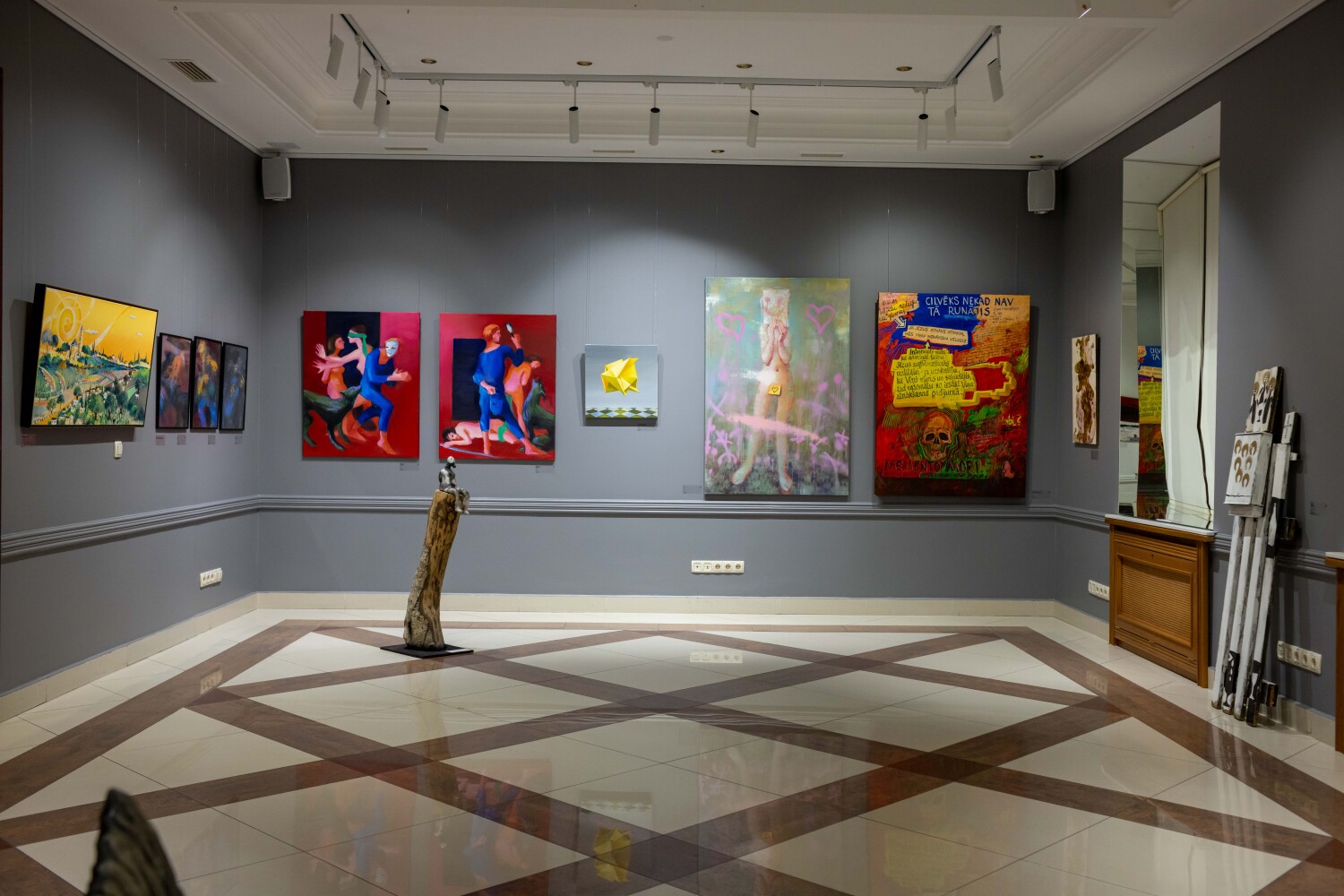 Curatorial Statement for GRATA BALVA 2026: “Multilayered Identity: Encountering the Other in Urban Space” Dr. Art. Deniss Hanovs
Can the Others Have Someone “Their”?
A Curator's Interpretaon of the works of the Arsts of the GRATA AWARD 2026
During the atmosphere of the Third Awakening (Naonal movement in the 1980s), during the decline of the USSR, the repertoire of Latvian rock music was able to mobilize different cultural
groups in a common struggle against the colonial regime. “Our own group will understand...” went the lyrics of a song that shaped the experience of a new community and encouraged people to create a new world while remembering a lost and forbidden history.
All of us, today's nomads—whether by choice and curiosity or by necessity—are at some point compelled to answer the quesons that form the fabric of the GRATA Award 2026 exhibion.
Who are the Others, and where do we encounter them? How do we become the Other to someone else?
Bringing together 106 works, this internaonal exhibion offers an opportunity to understand who, for whom, and under what circumstances becomes the Other, and whether it is possible to find its Own place —to belong,connect, and become integrated.
This queson is relevant to all contemporary European sociees, and arsts from different countries reflect on the Other whom they encounter in the urban environment—a space saturated with diversity and signs.
This year's exhibion is a fascinang anthropological journey in which several tendencies and paerns of reflecon can be observed. What makes this process especially engaging is that, unl the very last painng or sculpture is unpacked, no one knows what awaits them.
As the curator of the exhibion, I idenfied three main narrave lines within this broad collecon of works, which is itself highly diverse in genres, forms, materials, and symbols.
The first, and in my opinion dominant, narrave is the opposion—or conflict—between the city
and the countryside, between nature and technology. Its roots run so deep and are so ancient that the opposing sides can no longer remember how it all began. Perhaps it started with the never-ending industrializaon of Riga more than a century ago; perhaps in the Soviet-era story of the
disintegraon of nature and the agricultural cycle of life; or perhaps much more recently, in consumerist obsession, where rural grass and trees are made of supermarket plasc and
arficial greenery.
The second scenario of reflecng on Otherness is born and lives within the imaginaon and
psyche of arsts,filled with the interacon of reason and madness, games of alienaon, and various forms of escapism. Outer space, its coldness, and planetary loneliness have given birth to several creatures of the imaginaon that visitorswill encounter during the exhibion.
The rarest and smallest group of works presents encounters with the Other as an element of metropolitan bustle, as one of the construcons of normality in the metropolis, where skin colors,
social and religious idenes, and countless other forms of identy intersect. Here, a person can become their own Other, change and dress themselves in a different costume of identy, experience themselves through play while simultaneously observing the game.
Does this mean that it is difficult for us to open ourselves to Riga and to unbuon the coat of our idenes? I do not think so. The parcipants of the exhibion offer you, the viewer, a visual
revelaon of their souls, a confession, and their dreams—all at once, just as in the moving and ever-changing urban space.
The Other is also being formed and living within you. Come and discover this year's versions of the GRATA Award...
Attached materials
0
Pictures
0
Works
0
Video
0
Articles
0
Files